
Blunt Force Soup

I made a movie called “Blunt Force” and I want to talk about it.
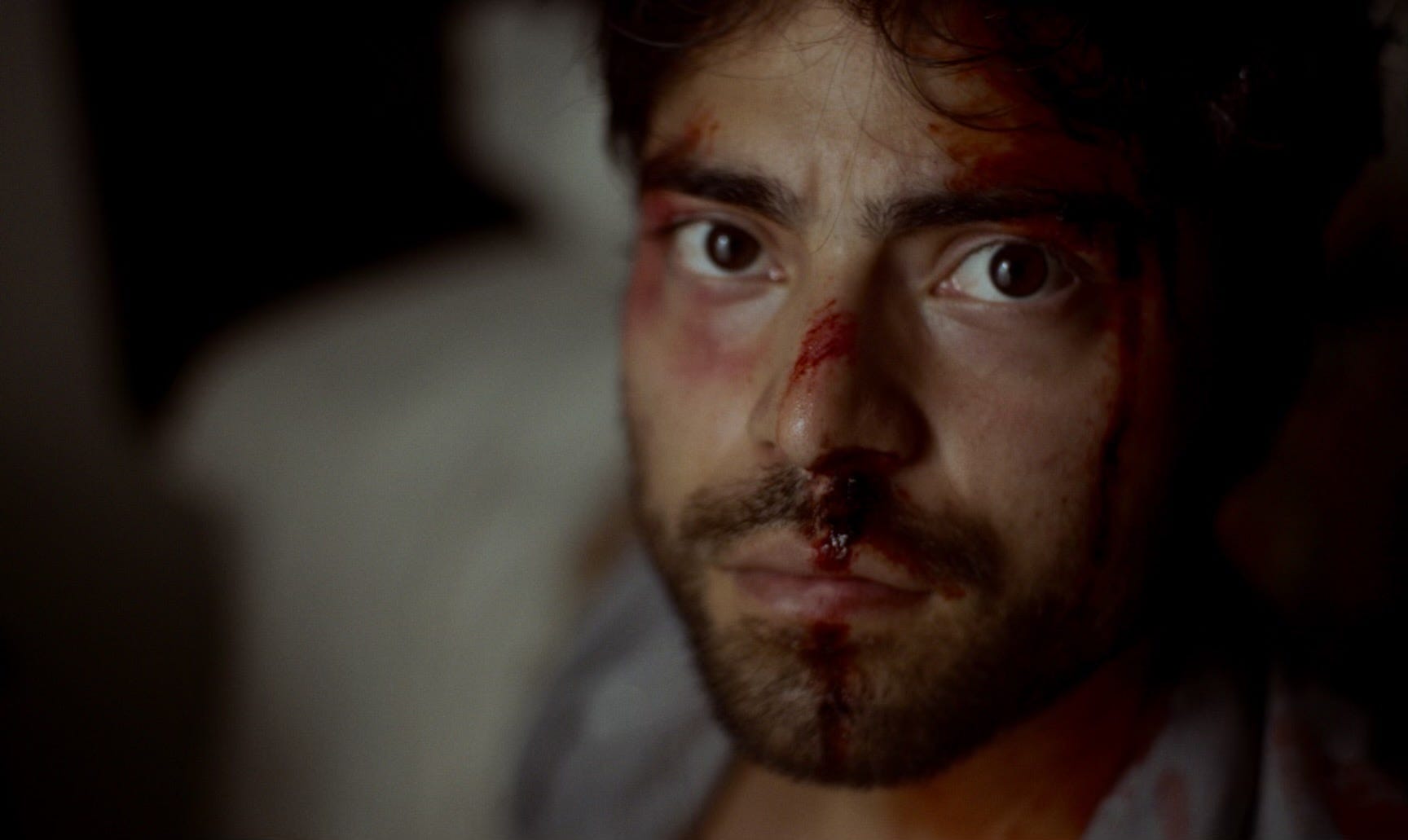
“I made a movie” is already ridiculously reductive. I spent the most time dealing with “Blunt Force” but it wouldn’t exist without the cast and crew. Oftentimes when I work with someone, I feel like I am speaking gibberish and a few very kind and talented artists listen to what I say and help make it reality. I love that about movies, and it’s why I always want to be on a set.
I’m speaking out to the void with this post because I think processing a piece of art from start to finish is a unique part of creation. My only goal as a filmmaker is to make work to process my own feelings. At the end of the day, it’s a very selfish belief so I try to connect it to things I think other people are concerned about. “Blunt Force” is a film about how all violence is political. No more, no less. It can be taken up for a righteous cause, or simply because someone has chosen a scapegoat for their own insecurities and pain.
My friend James McCabe had directed the play “Heroes of the Fourth Turning” at OU, which dealt very clearly with the inner lives of people I deeply disagree with. I also read “In Cold Blood,” which chilled me with its empathy and engaged me with its lurid descriptions of violence. David Lynch haunts “Blunt Force,” mostly Lost Highway’s falsely complex killer and Twin Peaks depiction of America’s inability to understand its own violent potential.
Three more films changed Blunt Force during the pre-production process. I was lucky enough to attend the Telluride Film Festival with Charisma Ganye, who later peer-pressured me into getting on Substack. We caught “The Seed of a Sacred Fig” on our first day of viewing, at 9pm. A three hour meditation on violence within the Iranian family gripped me with its use of documentary footage and thriller genre conventions, and it was a North Star of what kind of movie I should/could make.
I picked up “One False Move” in a Criterion sale. A neo-noir dripping with the inherent tension of the impoverished South. Every actor in this film has deep empathy for each other but due to their station in life, they must demolish and destroy any chance to connect. Otherwise it would be too painful.
“The Texas Chain Saw Massacre” is one of the great American texts. It is also a deeply broken and mangled film. It reminds me to savor edges and contradictions and to abandon logic when depicting violence. A hammer is more powerful than a gun on camera.
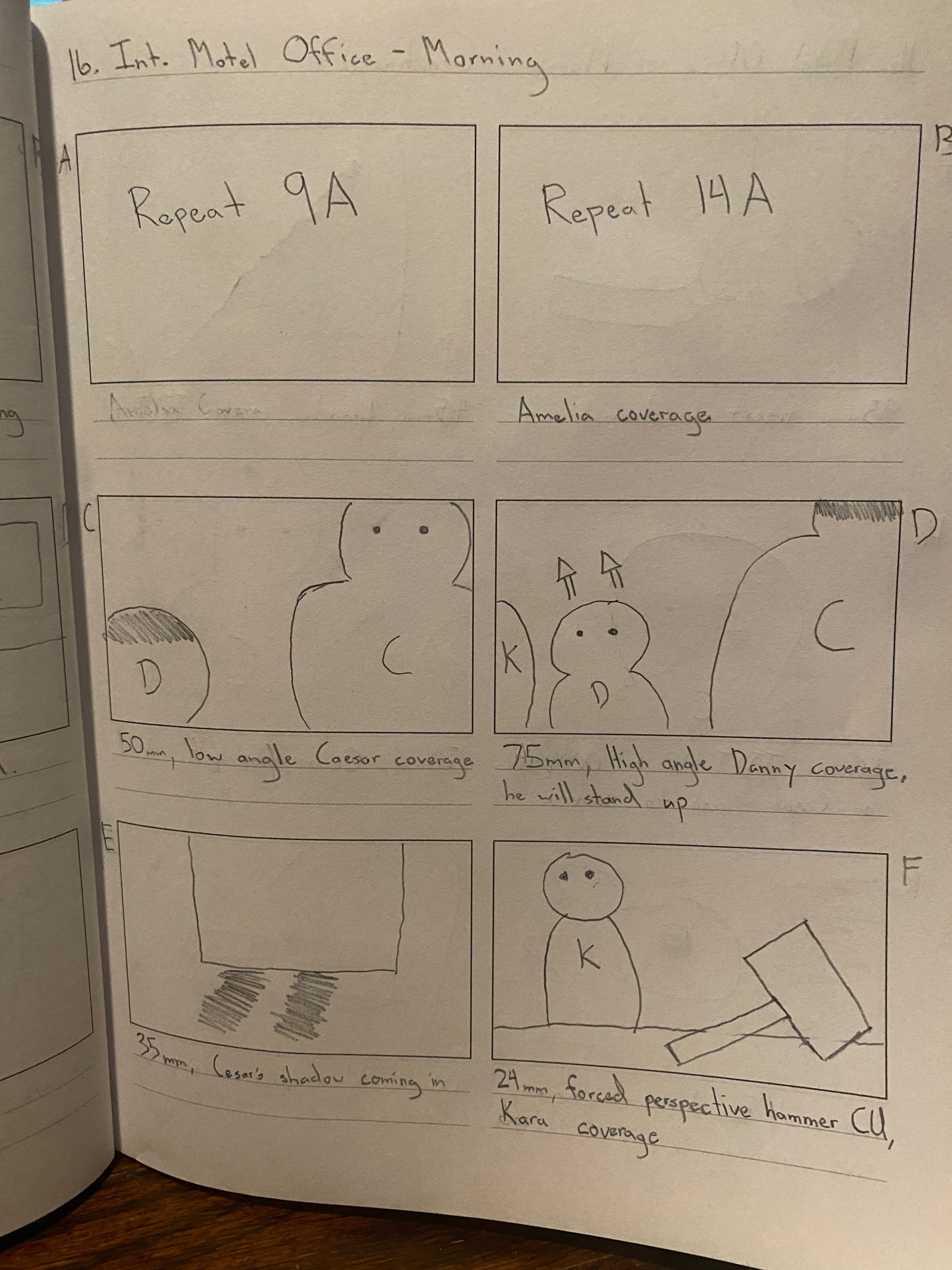
This film was the first one with a “stunt” set piece. I wanted to show you something physically painful, which I prefer to do through an impressionist visual style. If your brain connects the dots, you will create more vivid picture than my budget can provide. Even though people are very vehement on what they don’t think works in “Blunt Force,” I have heard no complaints on the jump scene.
The complaints I hear mostly, and what to give a genuine answer to, is how no one really connects with the plot of the movie. If I lay it out like this, I hope it reads clearly:
Cesar was a year younger than Danny. Amelia was three years younger than Danny. They all went to Dougherty high school.
Danny and Amelia married as soon as she graduated high school. About a decade passes as they remain in their hometown while Cesar eventually gets a law degree.
Cesar returns to run for, and eventually win, a position as his county’s state representative. Danny is unemployed, so Amelia, drawing on their shared past, reaches out to Cesar.
Danny finds out about a meeting the two plan to have to help him. This meeting will take place at a motel early in the morning, as Cesar is away on business.
Danny interrupts Cesar and Amelia’s meeting, and kills him.
And THAT’S where our story starts.
I had made a major mistake in writing the film, which was this is all backstory I knew I didn’t have time to include. This lays a lot of the film bare, and I hoped that as a director I could weave elements of this into the conversation, the surprise of Cesar still being alive, and the eventual death of Danny. I made the film a “false true crime” - a crime I could know every detail of even if it was completely invented for the film.
But as I made the film, I kept fighting with an element of myself that loves abstracting. The idea that if I got to interpret the true crime, I could lose details. It became something more personal, but also for absolutely no one else. I had hoped that I could make people curious to ask, but instead I distanced myself from so many people. I was describing a dream I had that made sense only to me, because I’m the only one who knows how my brain works.
Very few people have voiced their criticisms of “Blunt Force” directly to me, and yet I’ve been made aware of almost all thoughts on it. I worry I’ve come off as pretentious for having clear but constant thoughts on just about everything related to film. I can’t stop thinking about it as an art form because I love it. I have so much to learn, and every time I finish one film there’s an endless sea of new things to try.
My friend Ani Ces wrote “The Offering” for the movie based on just the script. They’re a friend from when I first started making TikToks. Yes, I used to make sketches on TikTok. It’s where I learned how to direct, write, and edit. Ani’s music perfectly matches the mournful feeling of caring so deeply about a home that doesn’t love you back. Oklahoma feels like that to me a lot of the time, and yet I cannot stop making films with it in mind. Even the next few projects I want to do (the evil sock movie, an experimental documentary on Audubon and Icarus, the sex worker movie I wrote and tried to make before Anora came out) will be tied to Oklahoma in some way.
I would like to be a part of this film community, and I hope sharing myself like this can be a step towards that. Log “Blunt Force” on Letterboxd. Message me all of your thoughts. Tell me about a movie you like or want to make. All I care is if what I make causes thoughts and ideas to happen. I don’t need to play Sundance. I don’t need a million dollar budget. I just want to share a feeling and see if that spurs anything else within you.
The best experience with “Blunt Force” was at the Kansas City Underground Film Festival. I was in a block called “American Dirtbag Cinema.” Every work was thought provoking but unpretentious; honest and yet unassuming due to our low budgets. It’s exactly how I wanted “Blunt Force” to be viewed, as well as a philosophy I’m working towards. If I slip up along the way, let me know.
My name is Elijah Bigler, and this was the Midwest Grotesque.